The Mitts, Towels & Microfiber: What's Really in a Pro Mobile Detailer's Van (Part 4)
The Mitts, Towels & Microfiber: What's Really in a Pro Mobile Detailer's Van (Part 4)
Parts 1 through 3 covered the chemistry, the delivery system, and the brushes. Part 4 is the part of the van that touches the paint more than anything else in it: the mitts and towels. A pro can buy the best chemicals on the market and still ruin a finish with a five-dollar towel, because towels are where cleaning turns into contact. Every pass across clear coat either lifts grit away from the paint or drags it across it.
That is why the towel drawer is the most organized corner of a pro van: a graded set of tools, each matched to a surface and a job, with zones that never mix.
What Microfiber Actually Is
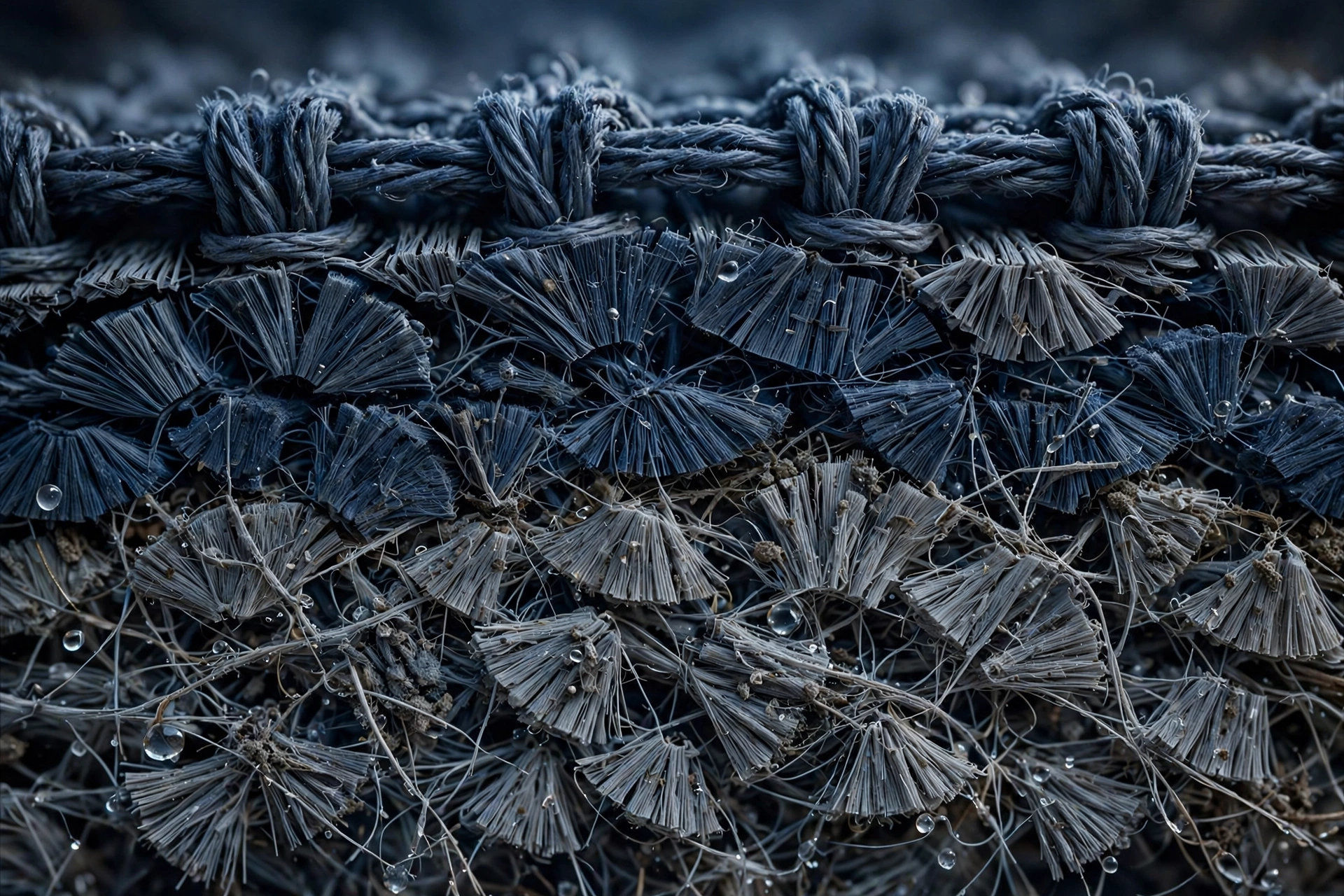
Microfiber is not a brand or a single fabric. It is a blend of ultra-fine polyester and polyamide fibers, split during manufacturing into wedge-shaped strands far finer than a human hair. The split is the whole point: those wedges create an enormous surface area that traps water, oil, and grit inside the towel instead of pushing it along the surface. Cotton terry drags particles across clear coat. Split microfiber lifts them off it.
The standard blend is 80 percent polyester to 20 percent polyamide, with 70/30 blends trading a little durability for extra absorbency. When a towel stops absorbing, the blend is rarely the problem. The care routine is, and that comes later.
Wash Mitts: The First Contact
The wash mitt is the first thing to touch the paint after the rinse, which makes it the highest-stakes tool in the wash. Pros carry two styles.
The chenille mitt, with long noodle-like strands, holds a large volume of soapy water and keeps grit pulled deep into the strands, away from the paint. It is the default for body panels. The twist-pile mitt, with short twisted loops, releases dirt more easily when rinsed and suits lower panels. A flat sponge traps grit against a flat face with nowhere for it to go, which is why pros retired sponges from paintwork years ago.
Pro practice: Rinse the mitt constantly, not when it looks dirty: a clean-looking mitt can still carry enough grit to mark soft paint. The two-bucket method exists for the mitt more than for the water. And mind the cuff: a hard or fraying cuff edge can do more damage than the pile ever will.
Drying Towels: Where Details Get Ruined
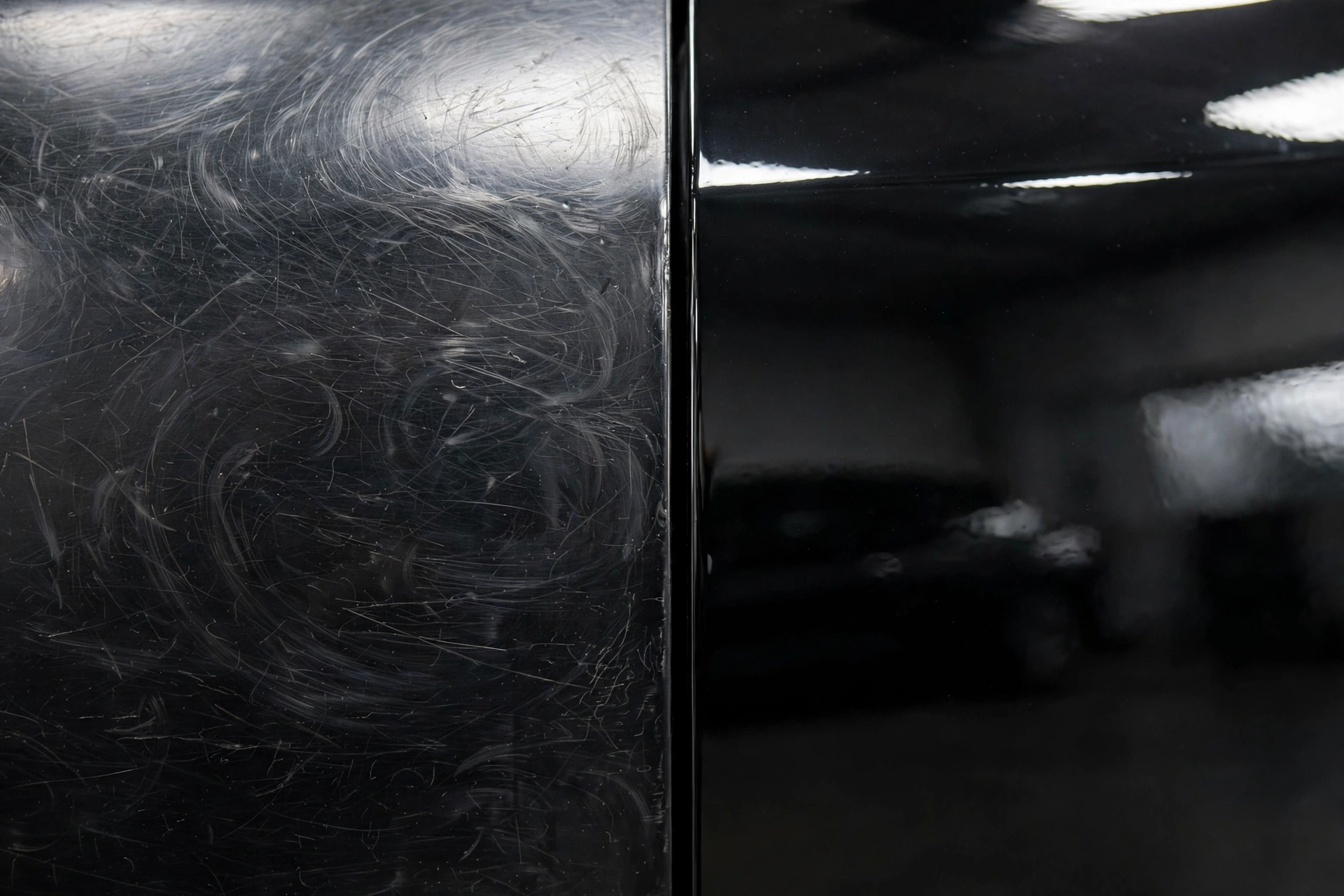
Drying is where most wash-induced swirls actually happen. The car is clean, the detailer relaxes, and a towel with a trapped particle gets dragged across a dry panel under pressure. Pros treat drying as a separate discipline with its own towels.
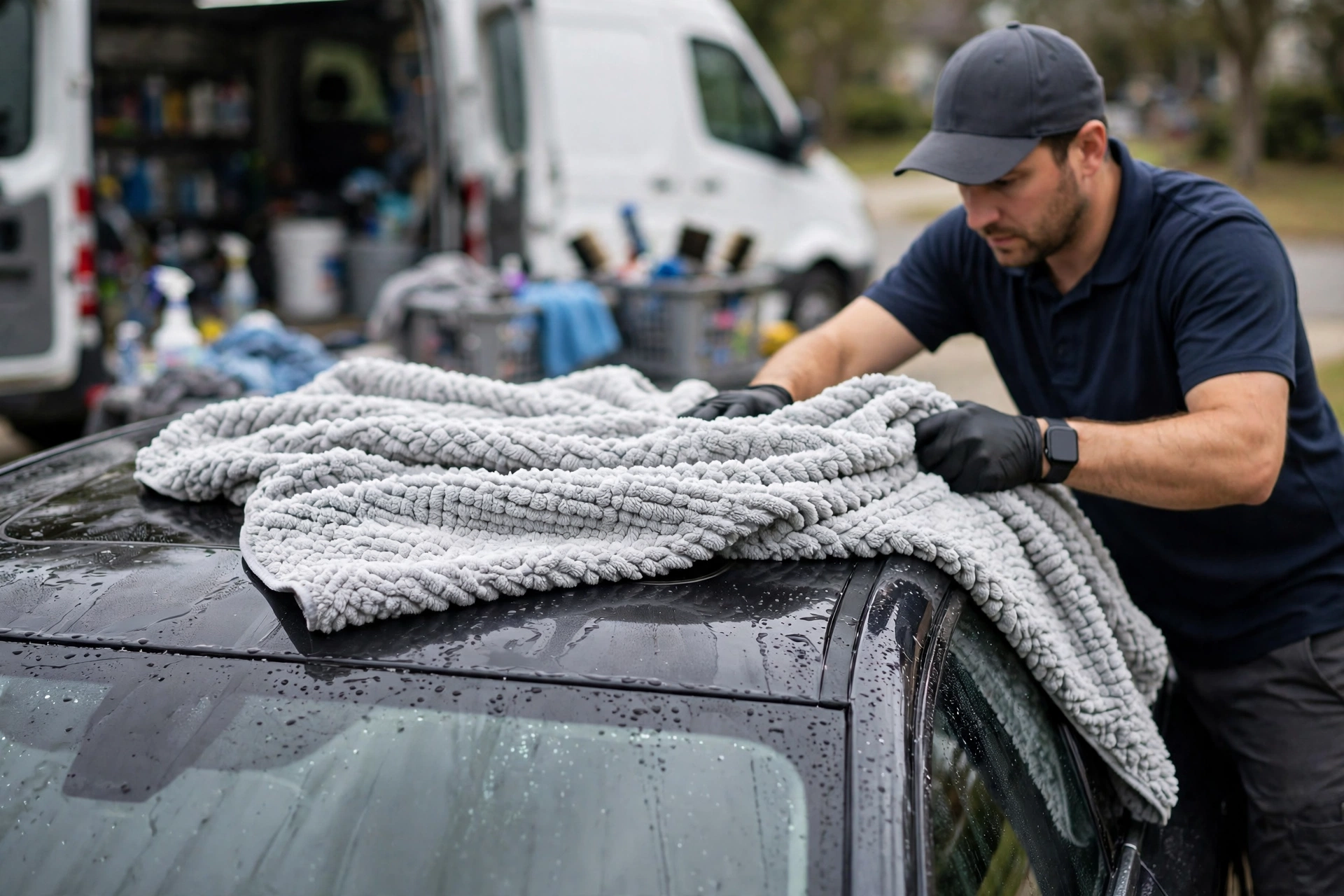
The workhorse is the large twisted-loop drying towel. The twisted pile pulls water deep into the towel and glides with very little friction, so one big towel dries a whole car with fewer passes, and fewer passes mean fewer chances to drag anything. Plush towels in the 500 to 600 GSM range add cushioning on soft or freshly corrected paint, while heavier towels above 800 GSM trade handling ease for maximum absorption on large vehicles.
Pro practice: Lay the towel flat and drag it slowly, or blot panels that are already mostly dry. Never scrub with a drying towel: it has no lubrication left to protect the paint. One drying towel per car is the rule, because a towel that dried a muddy SUV has no business touching a sedan next.
Reading the Label: GSM, Weave, and Edges
Three specs decide performance together, and two towels with the same GSM can behave completely differently.
GSM is density, not quality. Grams per square meter measures how much fiber is in the towel. Light towels around 220 to 350 GSM suit interiors and controlled wiping. Mid-range towels around 400 to 600 GSM cover general detailing and plush paintwork. Heavy drying towels run higher, but a very dense towel is slower to dry between uses and clumsier on tight trim. GSM tells you the weight class, not the weave.
Weave is the job description. Twisted loop is for drying. Plush pile is for paintwork, wax removal, and final buffing, where cushioning matters. Waffle weave, typically lighter at 300 to 500 GSM, spreads pressure evenly and leaves glass streak-free, which is why it owns the windows. Short pile gives control for interiors and product removal.
Edges are the hidden scratch. A hard stitched border or fraying serged edge drags a stiff line across every panel it touches. Pros favor silk or satin-bound edges on paint towels and edgeless towels for final buffing, and they inspect edges on every wash. A towel whose edge has gone stiff is retired from paint, however good its pile still looks.
Glass, Interiors, and the Utility Zone
The rest of the van follows one rule: a towel family per zone, and the zones never cross. Glass gets the waffle weave and nothing else: its low-lint structure and even pressure leave windows clear without the lint trail a plush towel sheds. Interiors get short-pile towels that are easy to fold and rotate around buttons, vents, and seams. Door jambs, engine bays, wheel faces, and exhaust tips get the utility towels: lighter, cheaper, rotated constantly, and never promoted back to paint. Color-coding is not decoration. When blue towels are paint and grey towels are wheels, nobody has to remember anything mid-job.
Pro practice: Count towels per job, not per van. The van carries enough clean stock for the whole route plus one extra car, because running out mid-route means reusing dirty towels.
The Care Discipline
Microfiber care is simple and unforgiving. Wash towels separately from lint-shedding cotton. Never use fabric softener or dryer sheets: they coat the split fibers with a waxy film that kills absorbency. Wash on warm, dry on low heat or air dry, because high heat melts the fine split fibers and hardens the towel. Wash new towels before first use to remove loose lint and dye. Inspect after every wash: a towel with a torn edge, a melted patch, or embedded grit is demoted to wheel wells and engine bays, never kept on paint out of thrift.
A cared-for towel set lasts hundreds of washes. A neglected one starts scratching within weeks, and the detailer usually blames the chemicals first.
Products mentioned
- (2 pack) Auto Drive Coral Fleece Microfiber Detailing Towels for Cleaning and Detailing 8 Pack — Walmart — $13.94. A coral fleece set: the plush category for drying and paintwork.
- Gear Up Microfiber Towels 25 Pack — NAPA — $14.99. A bulk pack: the utility category for jambs, wheels, and cleanup.
- Yichuhaoxi 15 pcs Microfiber Cleaning Cloth Lint Free Non Abrasive Reusable Washable Streak Free Assorted Colors Absorbent Towels for Kitchen Car — Lowe's — $46.65. An assorted-color set: the color-coding category for keeping zones separate.
Links above are affiliate links — we may earn a commission if you buy through them.
The Rules That Govern All of It
Five disciplines separate the pro towel system from a rag pile:
- Match the towel to the job — chenille or twist-pile to wash, twisted loop to dry, waffle weave for glass, short pile for interiors.
- Read weave and edges, not just GSM. Density without the right weave and a soft edge is a scratch waiting for a panel.
- One family per zone, and zones never cross. Paint towels never touch wheels, and utility towels never come back to paint.
- Rinse the mitt constantly and dry without scrubbing. Most swirls happen after the wash, not during it.
- Care is part of the tool. No softener, low heat, inspect every wash, retire damaged towels.
Brushes deliver chemistry into the surface. Towels decide what that surface looks like when the customer walks around the car. Next in the Van Tour: Part 5 — water, power, and van setup: the tanks, pressure washer, and vacuum behind the whole mobile operation.
Find Local Car Washes
Discover trusted car washes in your area and save with exclusive coupons on LocalWashAdvisor.
Browse Car WashesThis article was created by Shine, our AI Car Care Advisor, to provide helpful information about car care and local services.
Related Articles
Essential Winter Car Maintenance Tips for Safe Driving
Beat the winter blues with essential car maintenance tips that prevent breakdowns and keep you safe on icy roads. Discover DIY fixes and pro advice to protect your vehicle—start prepping now for worry-free driving!
Ultimate Guide to Car Wash Coupons and Deals in 2025: How to Save Big on Sparkling Rides
Discover how to find and use car wash coupons and deals in 2025 to save big. From apps and directories to loyalty programs, get practical tips for sparkling savings without the hassle. Perfect for budget-conscious drivers!
Self-Service vs Automatic Car Wash: Which Saves More Money in 2026?
Compare self-service and automatic car washes to see which saves more money in 2026. Break down costs, tips, and factors for budget-friendly cleaning. Discover if DIY or convenience wins for your wallet.