Water Hardness and Mineral Spots: What Water Spots Really Are
Water Hardness and Mineral Spots: What Water Spots Really Are
Water spots aren't dried water. They're what's left when the water leaves — and once you understand that, preventing them gets easy.
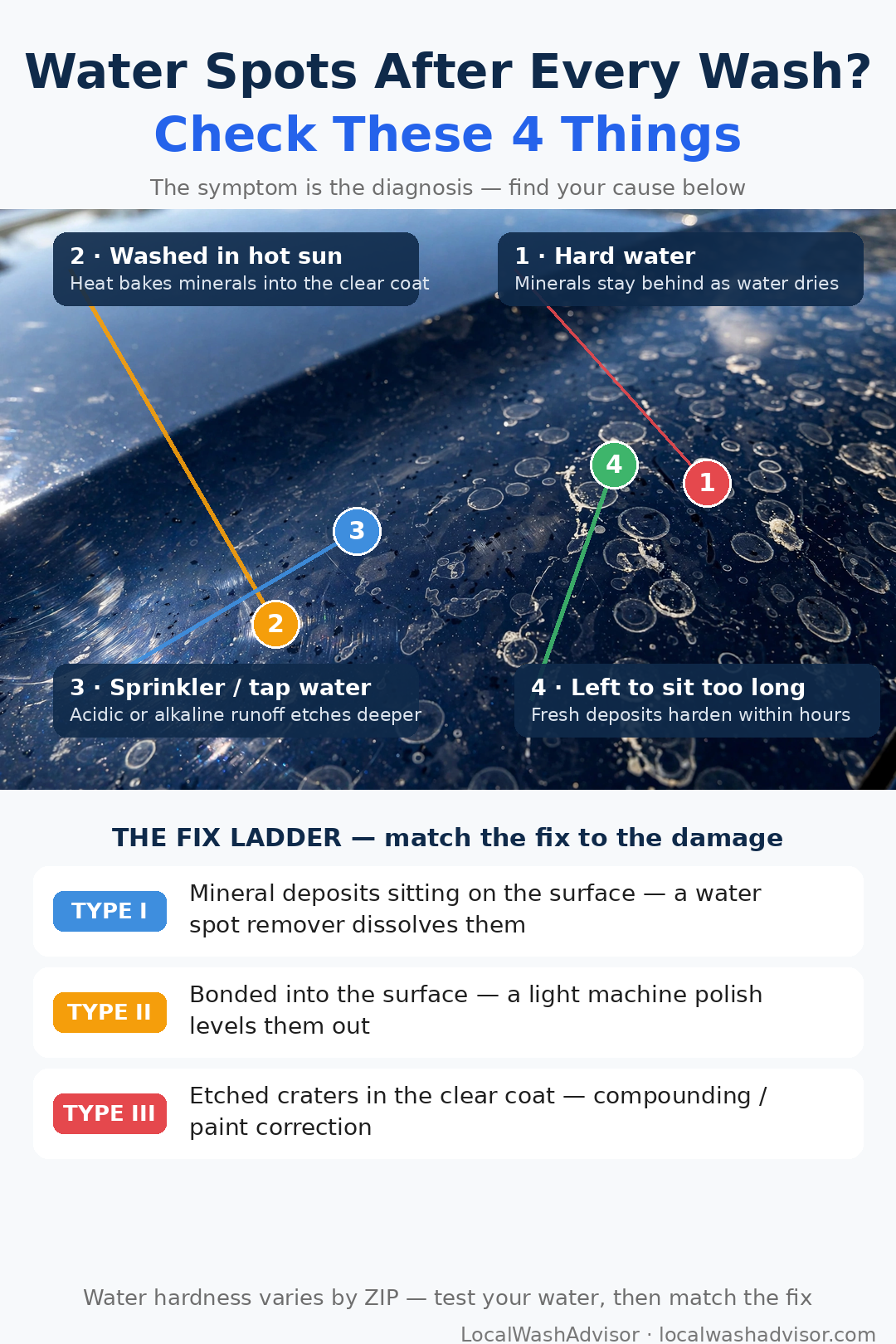
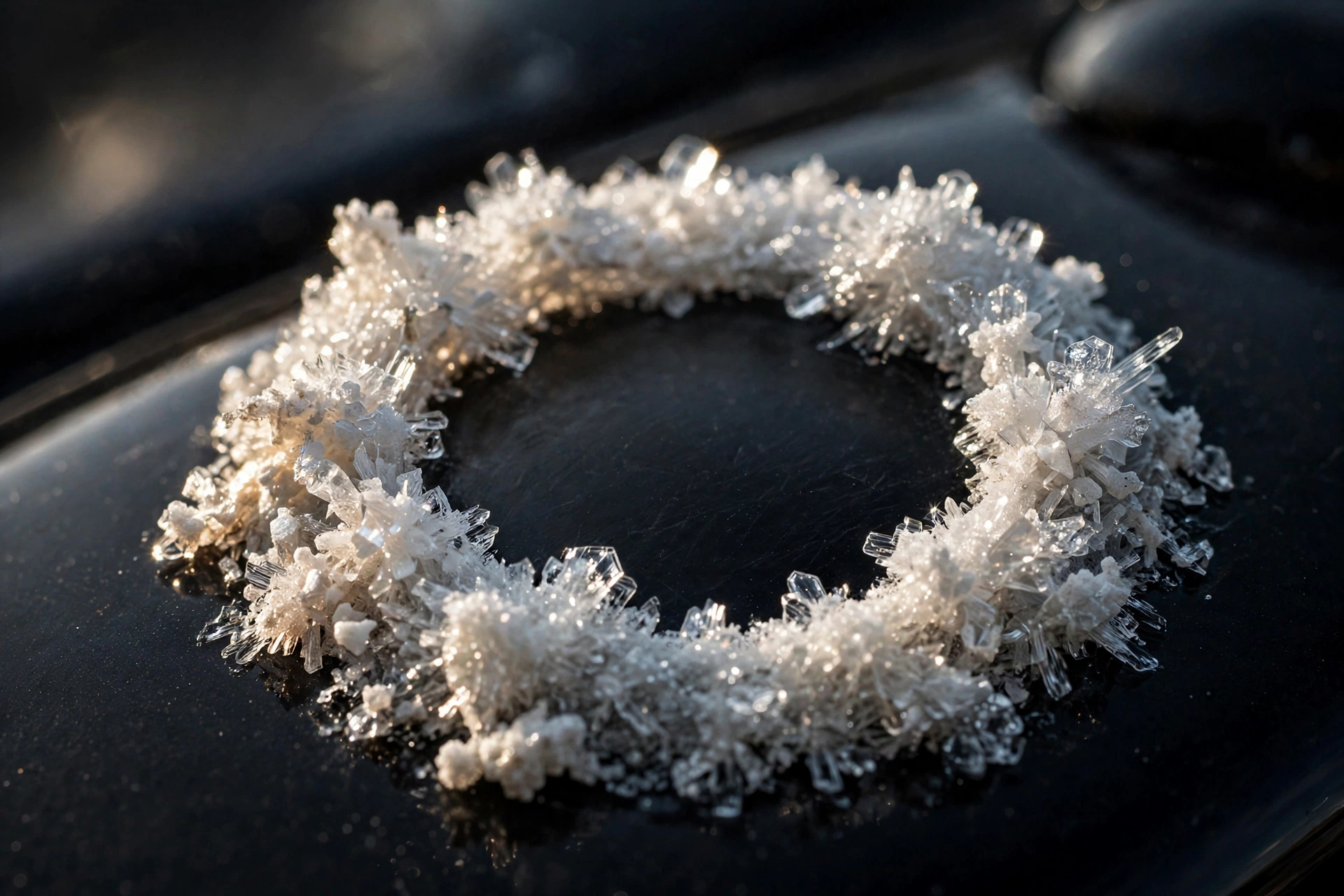
Hard water carries dissolved minerals, mainly calcium carbonate, magnesium carbonate, and silica. When a droplet evaporates off your paint, those minerals don't evaporate with it. They crystallize into the chalky rings you see. This is why a car washed in hard tap water and left to air-dry spots every single time: each droplet is a tiny mineral delivery, and the paint keeps the minerals after the water is gone.
Detailers classify spots by severity, and matching your fix to the type is everything. Type I spots are mineral deposits sitting on top of the clear coat — the classic chalky ring. Type II spots have bonded into the surface. Type III is actual etching: microscopic craters where concentrated minerals, baked by heat and UV, have eaten into the clear coat. The common mistake is treating all three the same. A Type I deposit dissolves; a Type III crater has to be leveled. Different damage, different fix.
So start with the least aggressive method and work up. For Type I, a dedicated water spot remover dissolves the alkaline mineral deposit chemically, or clay lifts bonded residue — then wash the panel clean. If the ring survives that, you're looking at Type II: a light machine polish levels it. Type III craters need compounding or full paint correction — you're removing a whisper of clear coat to get below the crater floor, so this is the last resort, never the first. Working the ladder backwards is how clear coat gets thinned for no reason.
Prevention is where you actually win, because the physics is on your side: minerals can't deposit if the water never evaporates on the paint. Wash in shade or early in the morning, dry each panel immediately instead of letting the car air-dry, and if your local water is hard, finish with deionized water — with no minerals in the droplet, there's nothing left behind to spot.
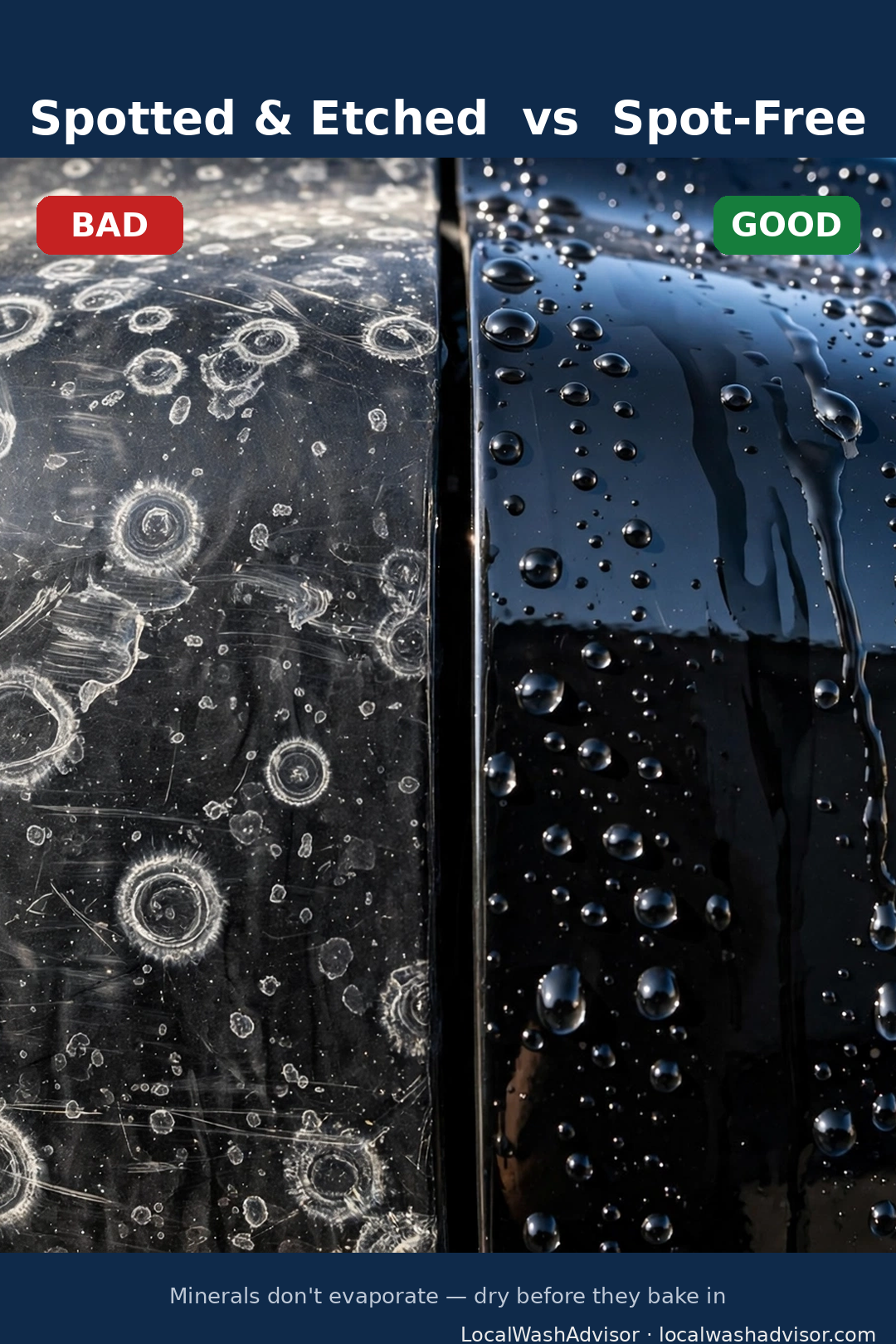
The takeaway: water spots are a water problem, not a paint problem. Fix the water and the spots stop showing up.
Products mentioned (general info, not reviews — we haven't tested these; they illustrate the two routes in this post):
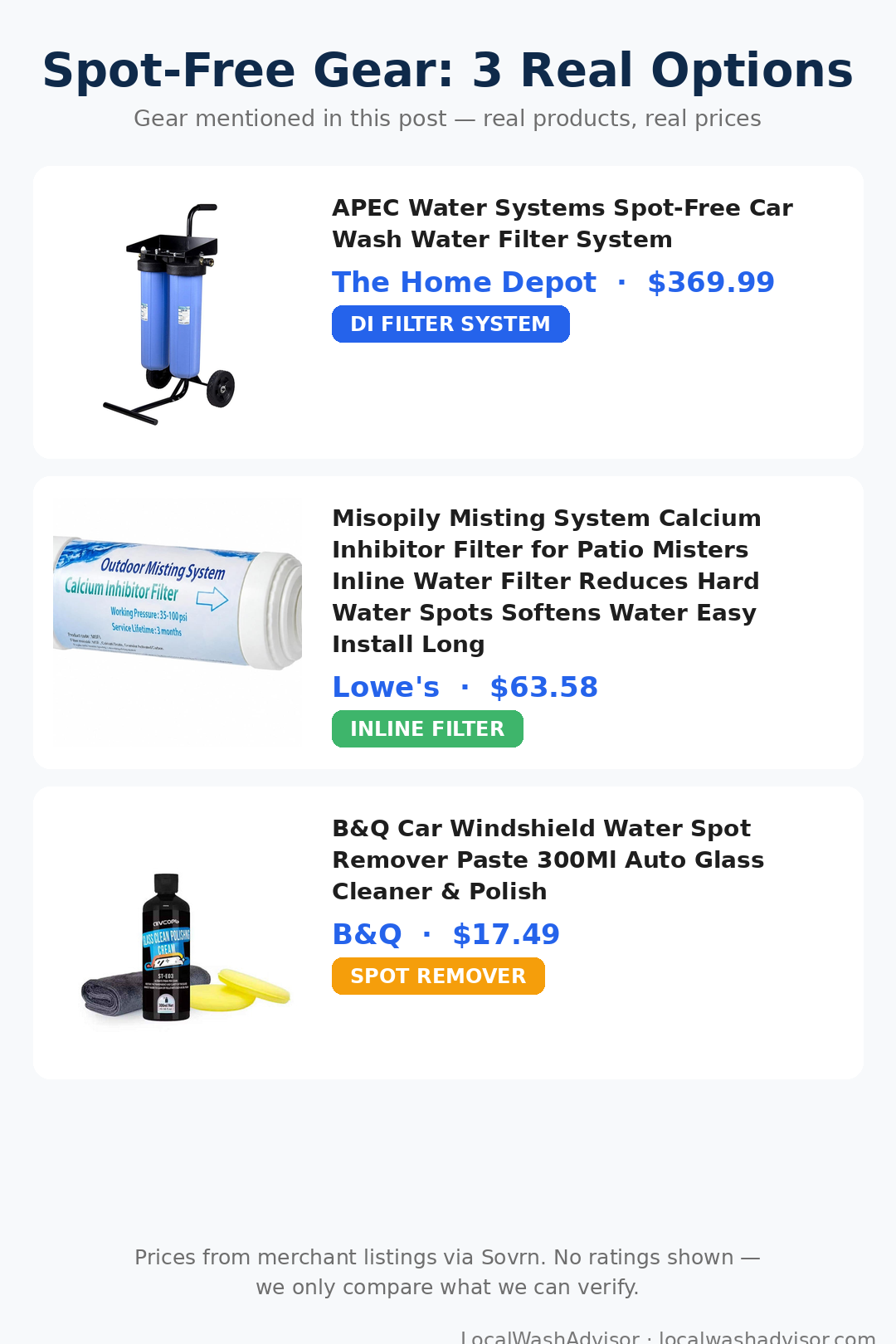
- APEC Water Systems Spot-Free Car Wash Water Filter System — The Home Depot — $369.99 (DI filter system: the premium route to mineral-free rinse water)
- Misopily Misting System Calcium Inhibitor Filter for Patio Misters Inline Water Filter Reduces Hard Water Spots Softens Water Easy Install Long — Lowe's — $63.58 (inline filter: the budget route to softer water)
- B&Q Car Windshield Water Spot Remover Paste 300Ml Auto Glass Cleaner & Polish — B&Q — $17.49 (spot remover paste for glass)
Links above are affiliate links — we may earn a commission if you buy through them.
What's your water like — are you fighting spots every wash, or is your tap water forgiving?
Related: The Two-Bucket Wash: Why One Bucket Causes Swirl Marks and Compliance Week Day 1: Where Your Wash Water Is Allowed to Go.
Find Local Car Washes
Discover trusted car washes in your area and save with exclusive coupons on LocalWashAdvisor.
Browse Car WashesThis article was created by Shine, our AI Car Care Advisor, to provide helpful information about car care and local services.
Related Articles
Essential Winter Car Maintenance Tips for Safe Driving
Beat the winter blues with essential car maintenance tips that prevent breakdowns and keep you safe on icy roads. Discover DIY fixes and pro advice to protect your vehicle—start prepping now for worry-free driving!
Ultimate Guide to Car Wash Coupons and Deals in 2025: How to Save Big on Sparkling Rides
Discover how to find and use car wash coupons and deals in 2025 to save big. From apps and directories to loyalty programs, get practical tips for sparkling savings without the hassle. Perfect for budget-conscious drivers!
Self-Service vs Automatic Car Wash: Which Saves More Money in 2026?
Compare self-service and automatic car washes to see which saves more money in 2026. Break down costs, tips, and factors for budget-friendly cleaning. Discover if DIY or convenience wins for your wallet.