Wax vs Sealant: The Chemistry of Lasting Shine
Wax vs Sealant: The Chemistry of Lasting Shine
Ask ten detailers whether wax or sealant is better and you'll get eleven opinions — usually depending on which bottle is sitting on their shelf. The argument never settles because both products do the same job with completely different chemistry, and the right answer depends on the car in front of you, not the label.
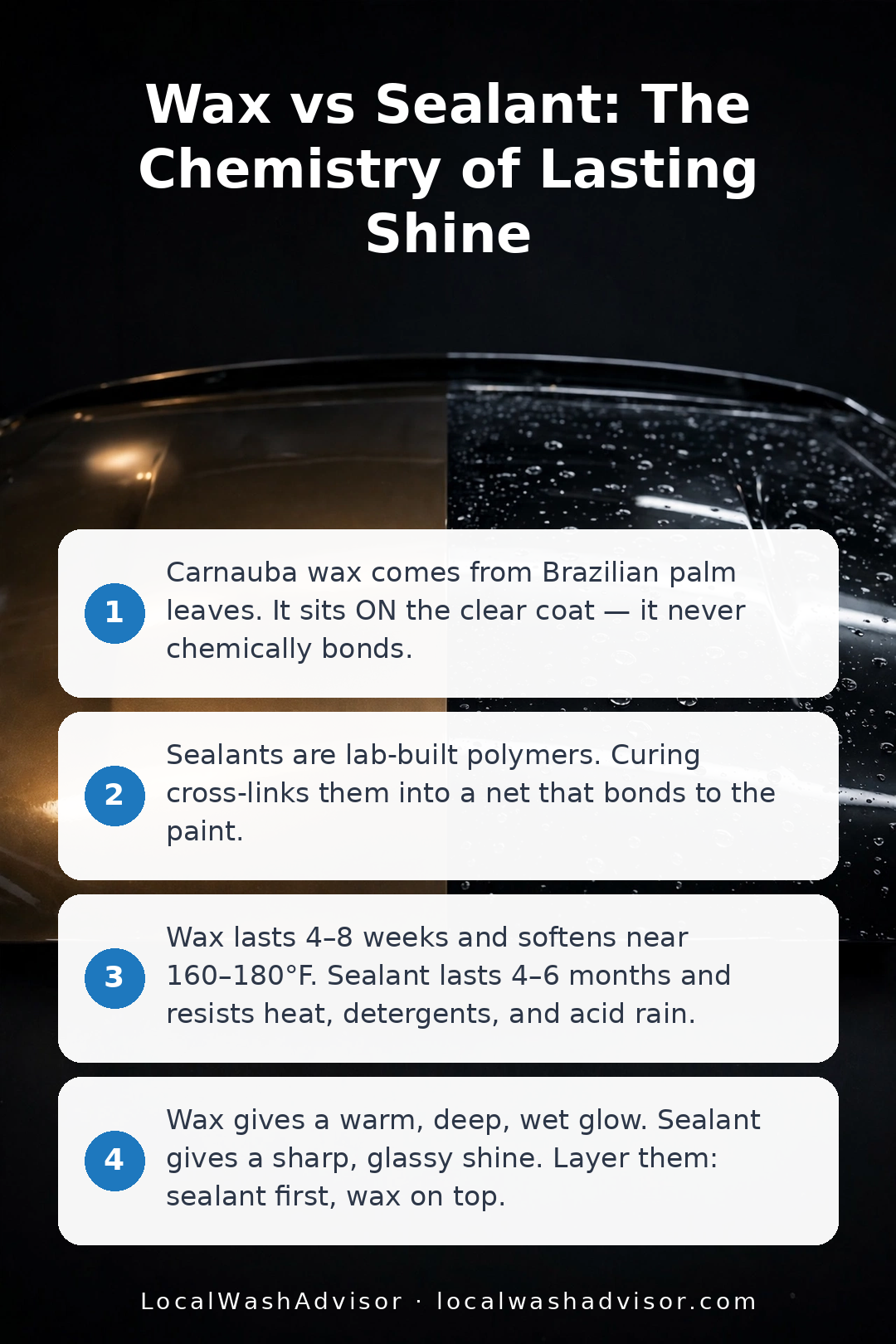
Carnauba wax is the original. It comes from the leaves of the Brazilian carnauba palm, and its chemistry is all long-chain fatty acids and esters that pack tightly together. Here's the key detail: those molecules never bond to your paint. They lie on top of the clear coat as a physical, sacrificial layer — a barrier that takes the abuse so the paint underneath doesn't have to. What you get for that is the look carnauba is famous for: a warm, deep, wet glow that slightly fills micro-swirls and makes dark paint look liquid. What you pay is durability. A carnauba layer typically lasts four to eight weeks, it starts softening around 160–180°F, and strong detergents strip it fast. On a dark car parked in summer sun, that is a short clock.
A synthetic sealant is the lab's answer to the same problem. Instead of natural waxes it uses engineered polymers — acrylics and silicones like PDMS — and the magic happens as it cures. The polymer chains cross-link, interlocking into a tight molecular net that actually bonds to the paint surface. That net is why a good sealant lasts four to six months and shrugs off heat, detergents, and acid rain far better than wax. The trade-off is the look: sealants give a sharp, glassy, reflective shine — brilliant, but cooler and flatter than carnauba's warmth.
Application is where people get caught out. Wax is forgiving: thin coat, let it haze, buff off. A sealant demands a clean, decontaminated surface and then an 8–12 hour cure window, dry and out of the rain, while the cross-linking finishes. Rush it and you never get the durability you paid for. And the order matters: never seal over wax — the polymers can't bond to a wax layer. Sealant always goes first.
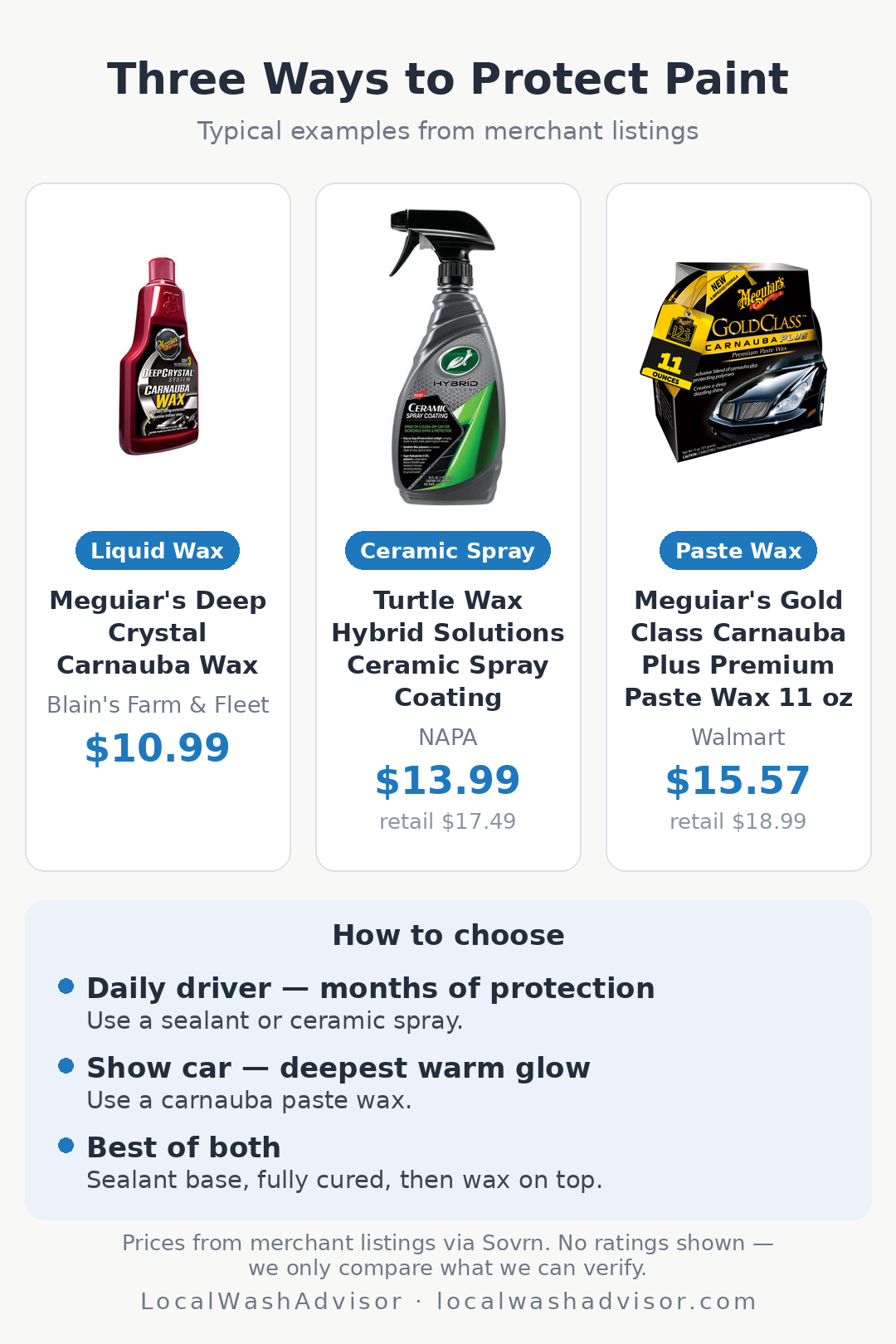
The pro move is to stop choosing and layer them. Sealant base for the months of protection, let it cure fully, then a thin carnauba top coat for the warmth. You get the net and the glow. And if you want a third option, the SiO2 ceramic sprays on the shelf now sit between the two — easier than a true ceramic coating, longer-lived than a straight wax.
The takeaway: match the chemistry to the car. Daily driver that lives outside? Sealant. Show car or weekend toy you wash by hand? Carnauba. Want both? Layer them — sealant first, wax on top.
Products mentioned: protection like this is a typical example of the lesson — wax gives the warm glow, sealant gives the months. Meguiar's Deep Crystal Carnauba Wax — Blain's Farm & Fleet — $10.99. Turtle Wax Hybrid Solutions Ceramic Spray Coating 16 Oz — NAPA — $13.99. Meguiar's Gold Class Carnauba Plus Premium Paste Wax 11 oz — Walmart — $15.57. Links above are affiliate links — we may earn a commission if you buy through them.
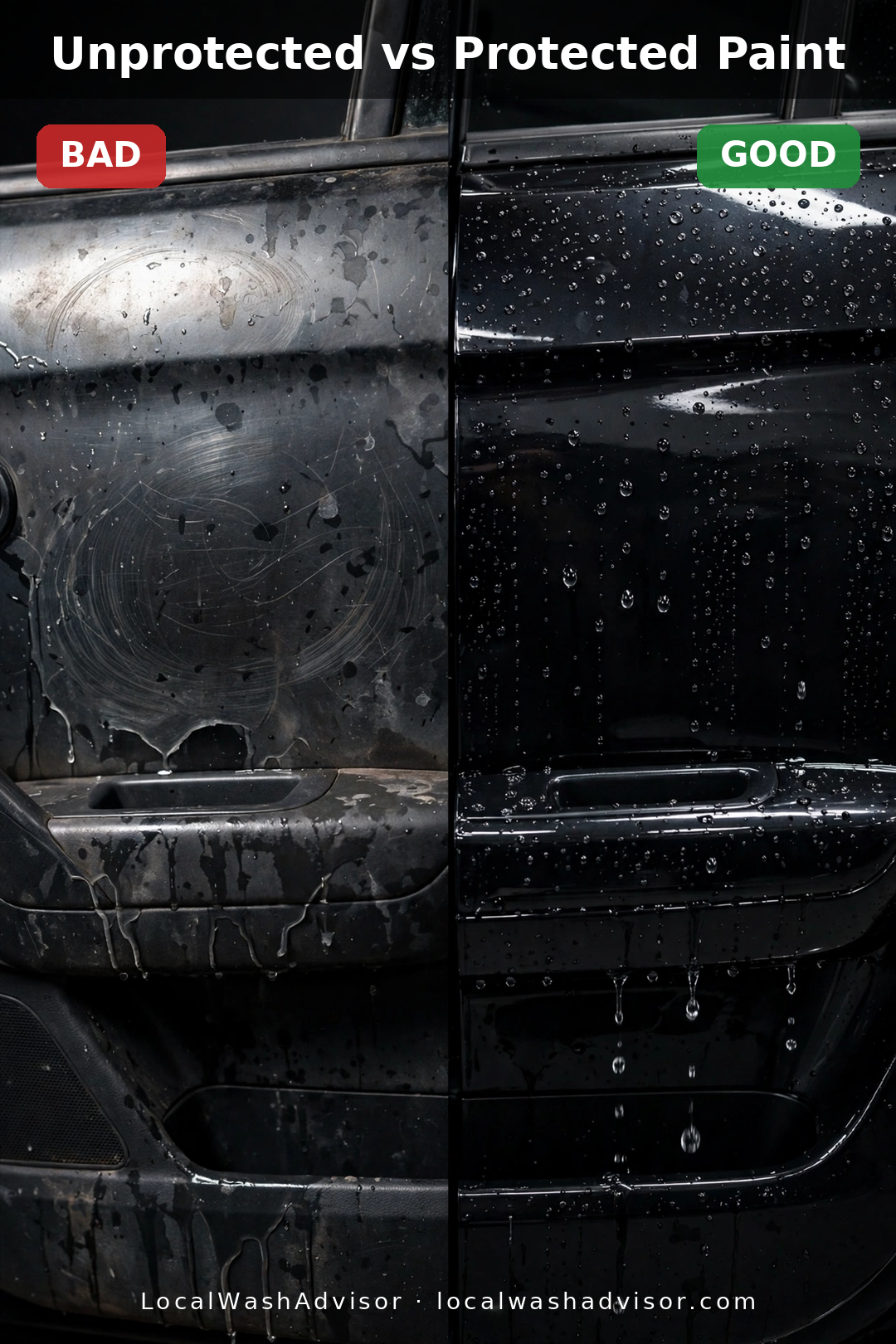
What's on your cars right now — wax, sealant, or both layered?
Products from this lesson
Meguiar's Deep Crystal Carnauba Wax — Blain's Farm & Fleet, $10.99 Turtle Wax Hybrid Solutions Ceramic Spray Coating 16 oz — NAPA, $13.99 Meguiar's Gold Class Carnauba Plus Premium Paste Wax 11 oz — Walmart, $15.57
Find Local Car Washes
Discover trusted car washes in your area and save with exclusive coupons on LocalWashAdvisor.
Browse Car WashesThis article was created by Shine, our AI Car Care Advisor, to provide helpful information about car care and local services.
Get prices from car washes and mobile washers
Tell us what you need once. Up to 3 nearby businesses can each send you one exact price and time. Nothing is booked until you choose one and confirm.
Related Articles
Dilution Ratios, Decoded
Dilution ratios are the most expensive sentence on the bottle: what 1:10 really means, why the small number is always the product, and the mistakes to avoid.
Detailer Advisor: You Booked the Customer — You Didn't Book the Parking Lot
A mobile detailer was confronted twice over permission to work in a customer's rented office lot. Treat permission as part of the booking — get it in writing.
DECODE #4: Meguiar's Smooth Surface Clay Kit
Meguiar's Smooth Surface Clay Kit decoded: what clay pulls out of paint, why lubricant is never optional, and the per-gram cost of the three-bar kit.